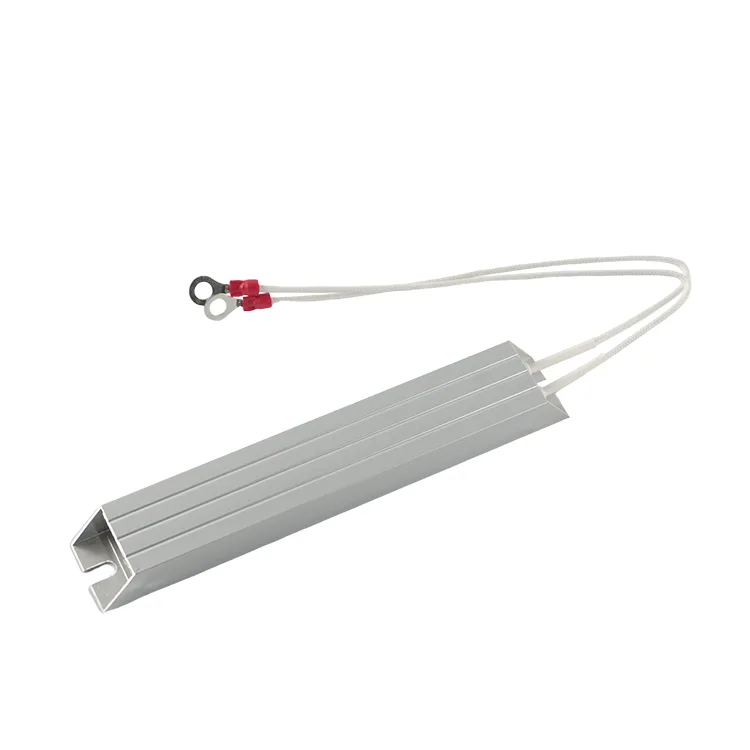
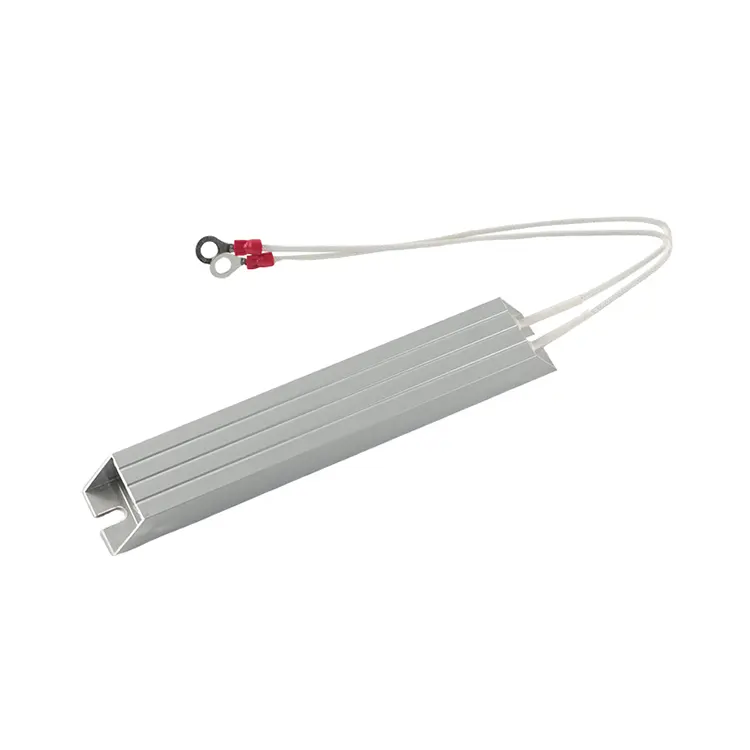
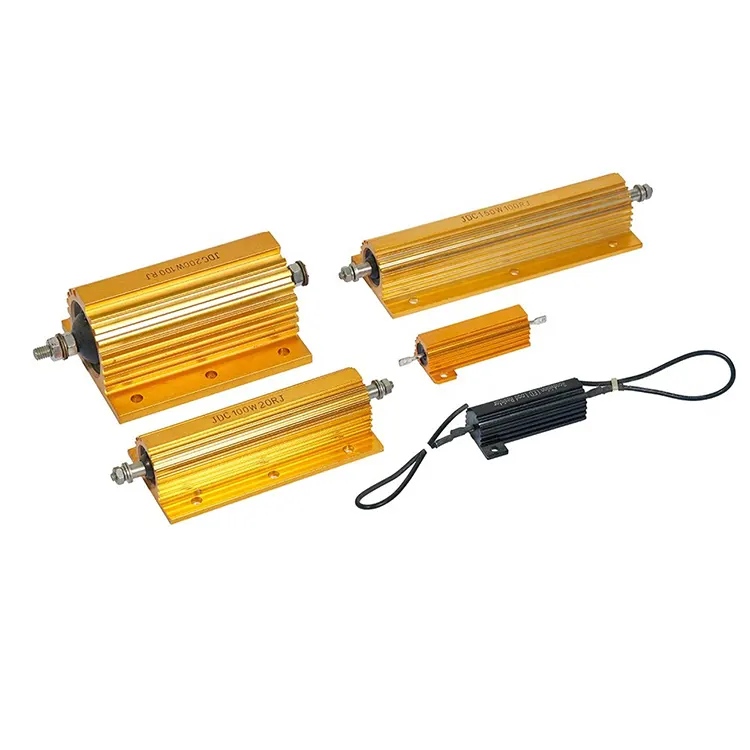
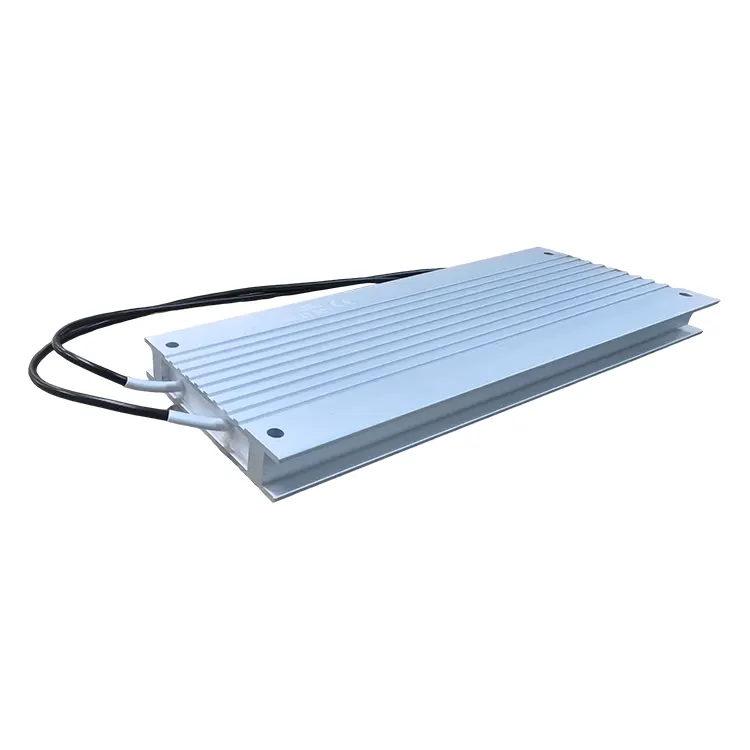
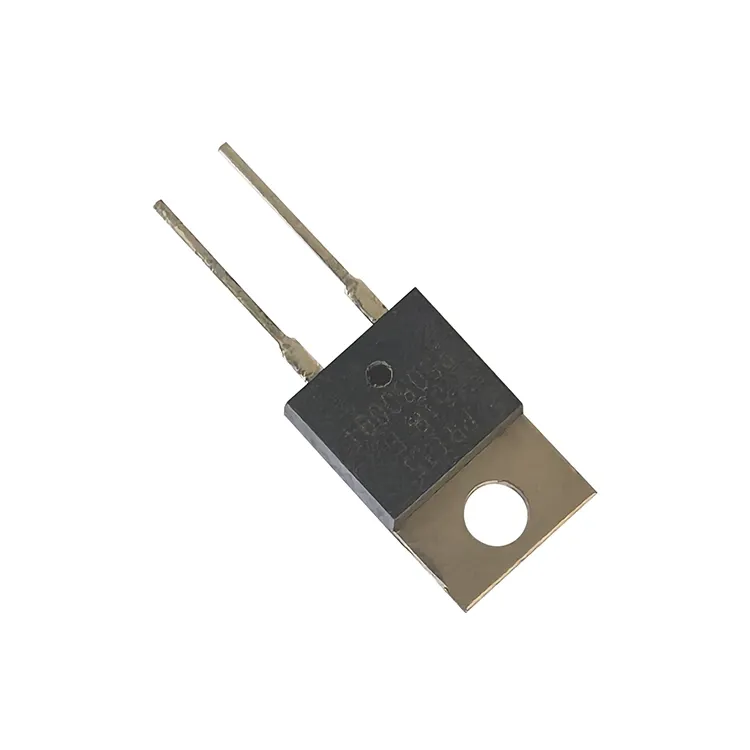
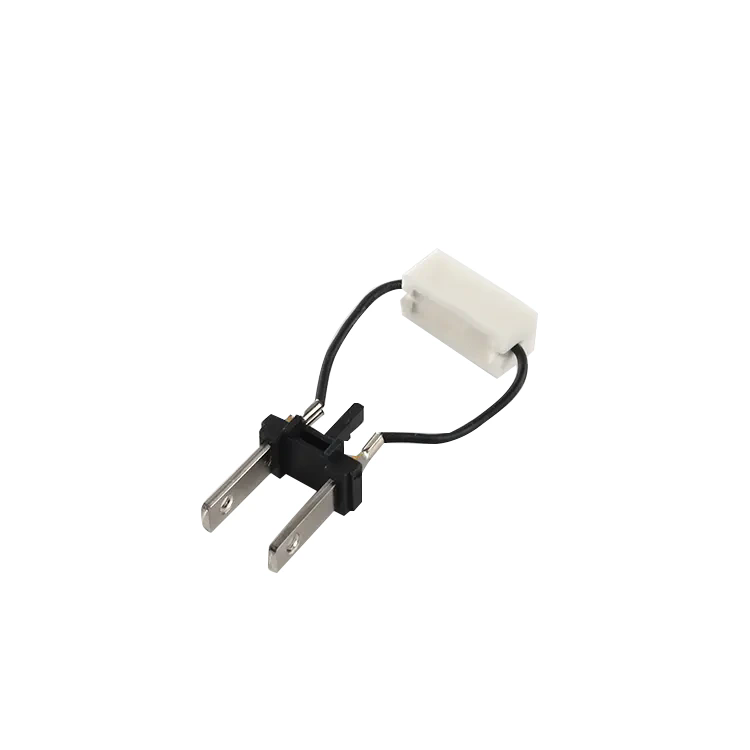
The Aluminium Housed Resistor is constructed by inserting the resistor core (typically a wire-wound resistor or thick-film resistor) into an aluminium alloy housing, filling and securing it with heat-conductive insulating materials (such as quartz sand or heat-conductive silicone gel), and then sealing it with epoxy resin or silicone rubber. The aluminium alloy housing not only provides mechanical protection but also acts as a heat sink. It can be attached to the large heat sink or casing of the equipment through the mounting surface, significantly reducing the thermal resistance. This structure enables the aluminium shell resistor to achieve large power dissipation within a small volume, and it is one of the most commonly used power resistors in current industrial electronic equipment such as servo drives, frequency converters, power supplies, robots, and charging stations.
It has a small size, high power density (for example, the size of a 60W aluminium housing resistor is approximately 80×40×20mm), high heat dissipation efficiency (thermal resistance < 5℃/W), good insulation performance (with a withstand voltage of up to 2000VAC), good resistance value stability, and strong shock and impact resistance. The power rating ranges from 50W to 2000W (requiring appropriate cooling conditions). There are also non-inductive models available (using double-wire parallel winding or thick film technology), suitable for high-frequency or fast-switching circuits. The aluminium housing surface is usually treated with anodizing, which is both aesthetically pleasing and corrosion-resistant. The leads use high-temperature silicone wires or quick connectors (such as clips, M4 screws). The resistance accuracy can reach ±2% or ±5%, and the temperature drift is as low as ±100ppm/℃.
1) Frequency converter braking resistor: Install the aluminum shell resistor directly inside or on the side radiator of the frequency converter to save space within the cabinet;
2) Servo motor energy dissipation resistor: Used for the built-in braking option of the driver;
3) Power supply test dummy load: Especially for the aging test of switching power supplies, use the aluminum shell resistor in combination with a cooling fan;
4) Pre-charging circuit in automotive electronics (pre-charging of the main circuit of the electric vehicle battery);
5) Current-limiting resistor in elevator control cabinets.
When selecting the model, in addition to the conventional resistance value and power parameters, the most crucial factor is the cooling condition: The rated power of the Aluminium Housed Resistor is determined under the condition that the shell temperature is ≤ 25℃. If it is installed in an environment without a heat sink or air cooling, the actual allowable power is only 20% to 30% of the rated value. Therefore, users must use the product at a reduced power level based on the actual cooling situation. Additionally, the installation surface must be coated with thermal conductive silicone and fastened with screws (recommended torque 0.5 - 1 Nm). If multiple aluminium shell resistors need to be used in parallel, it is necessary to ensure that the resistance values of each resistor are consistent and the ventilation is uniform. One common failure reason for aluminium shell resistors is the aging of the filling material, which leads to a decrease in insulation or the breakage of the internal winding wires. High-quality products should undergo a high-temperature and high-humidity bias test (such as 85℃/85%RH, 1000 hours).
In addition, RST Electric also offers various types of Braking Resistors. Please feel free to come and inquire about or purchase them!