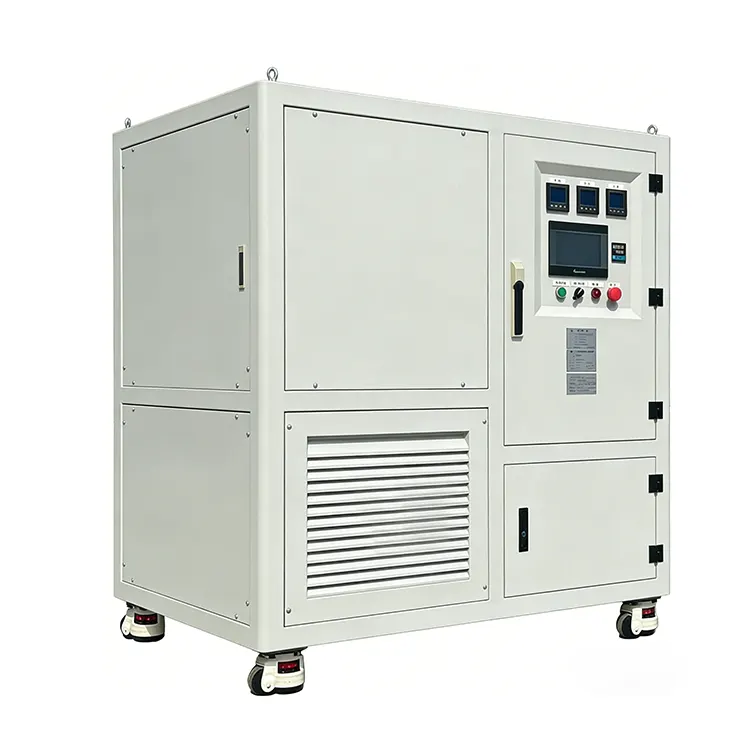
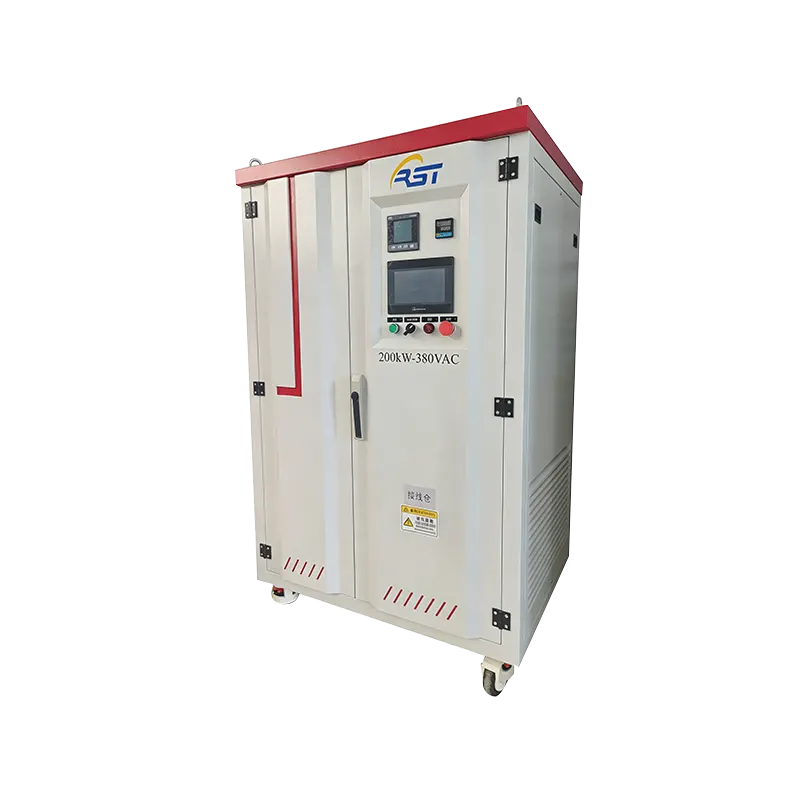
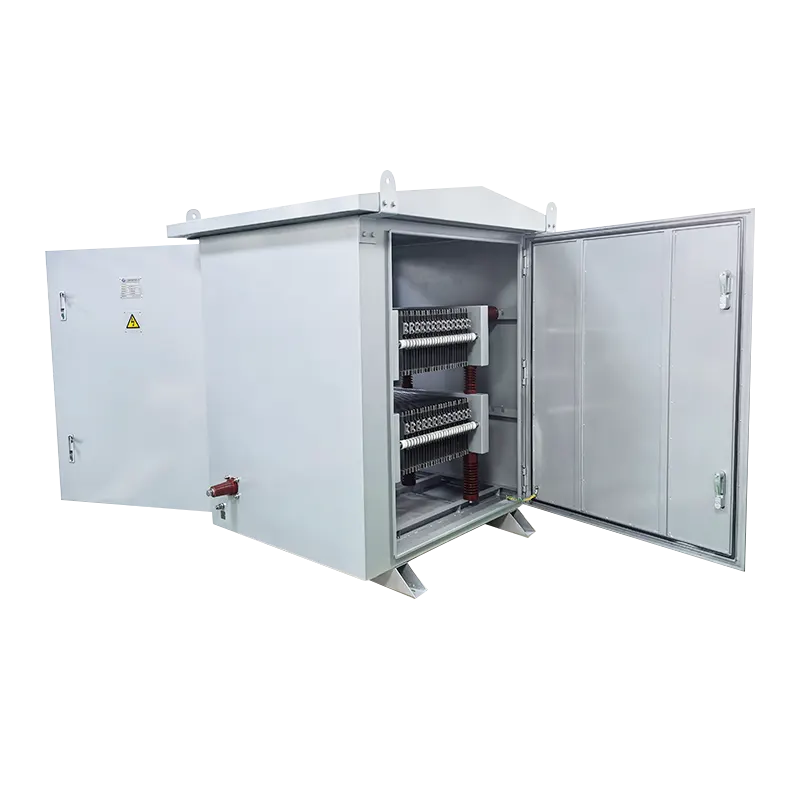
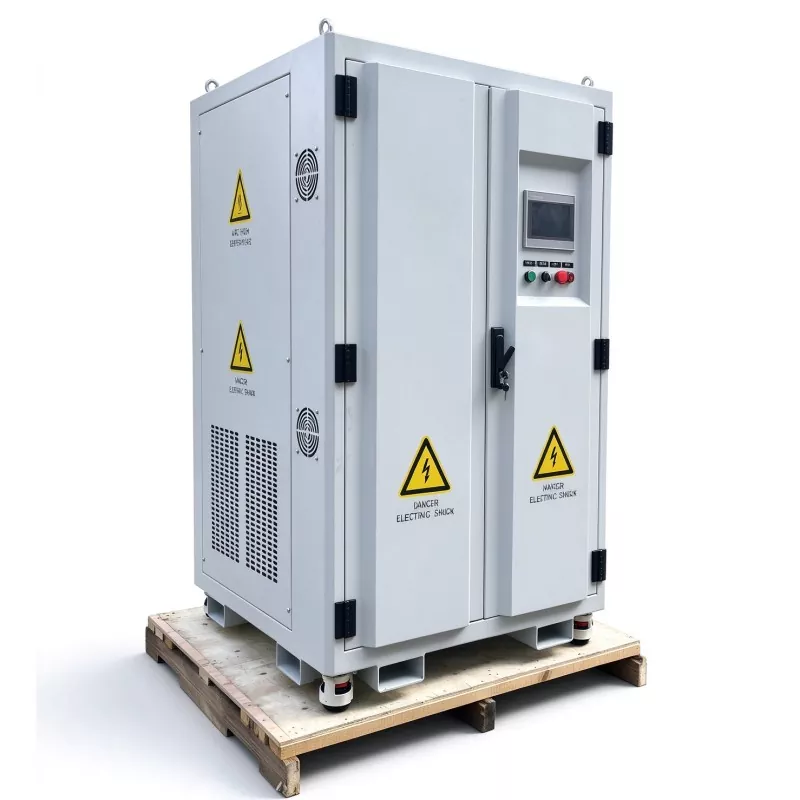
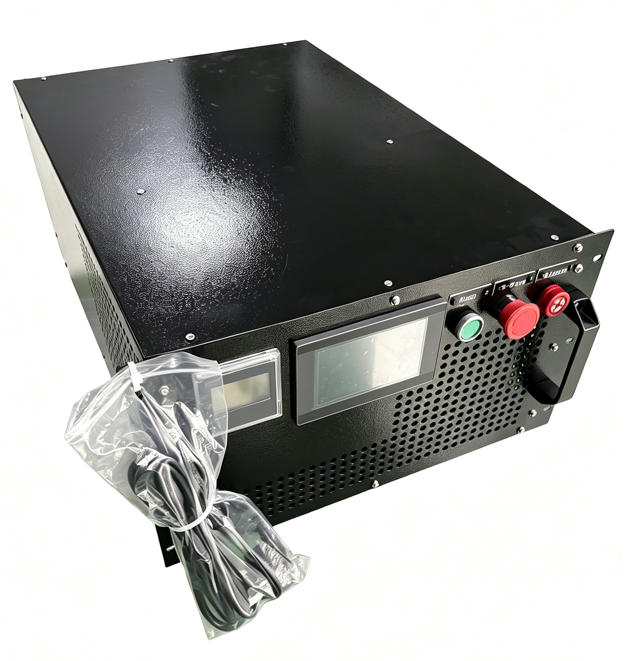
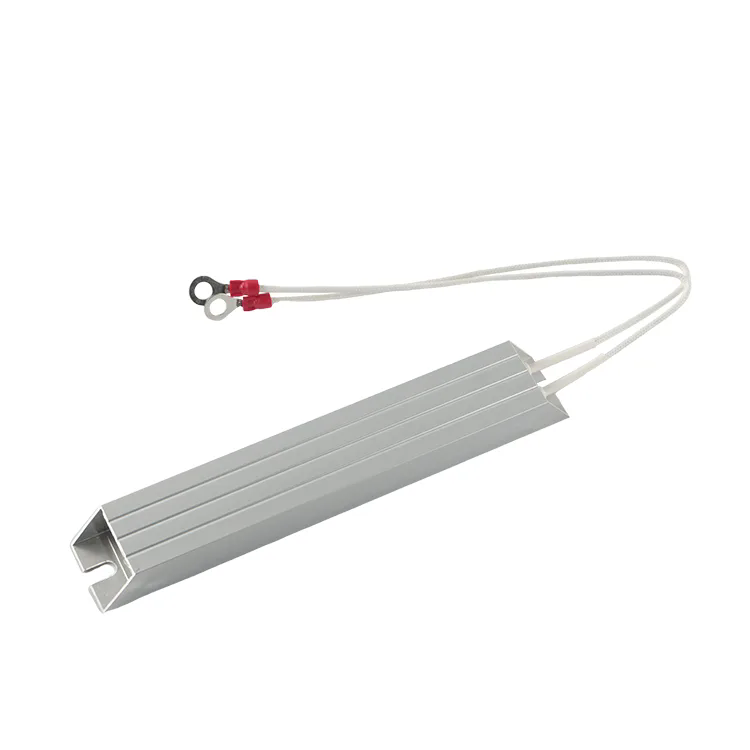
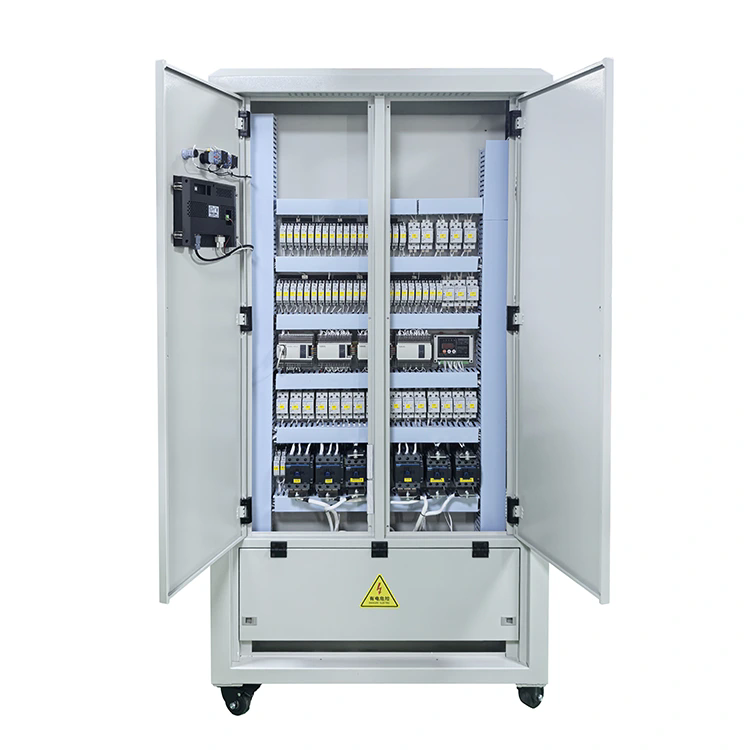
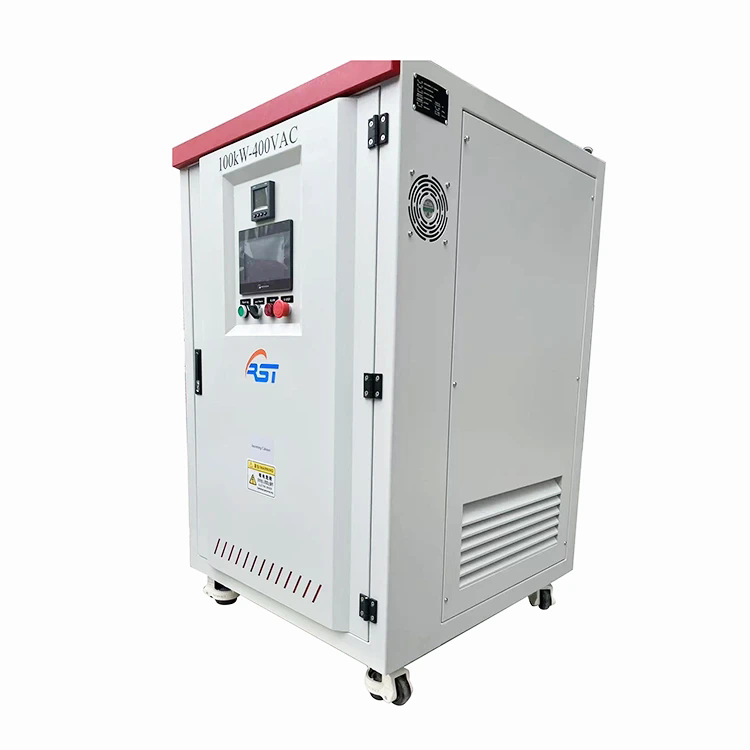
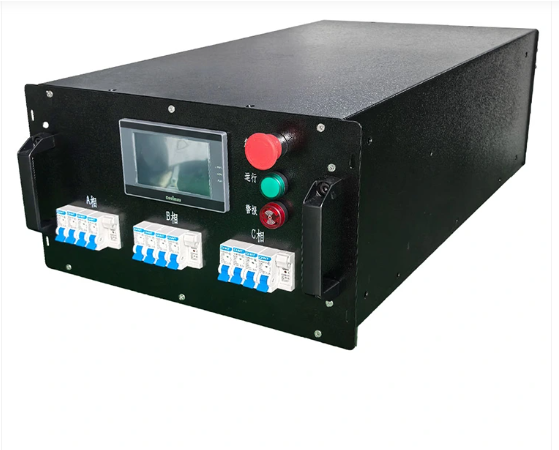
RCD Load Bank is the abbreviation of Resistive-Capacitive-Diode Load Bank, which is a special load simulation device integrating resistance (R), capacitance (C) and diode (D). Its main function is to simulate single-phase or three-phase rectifying loads, such as switching power supplies, LED drivers, battery chargers, and the front-stage rectifier bridge of inverters, etc., which are non-linear loads and their electrical characteristics. RST Electric also offers a variety of load banks in different specifications. Please feel free to come and consult for purchase!
The typical feature of the RCD Load Bank is that the input current is in a pulse-like pattern, containing abundant harmonic components (especially the third harmonic), with a low power factor and severely distorted current waveform. The RCD load cabinet can truly reproduce such harsh load conditions, and is used to test the adaptability of power supplies, generators, UPS, inverters, etc. to rectifier loads, the harmonic suppression effect, and the performance of power factor correction (PFC) circuits.
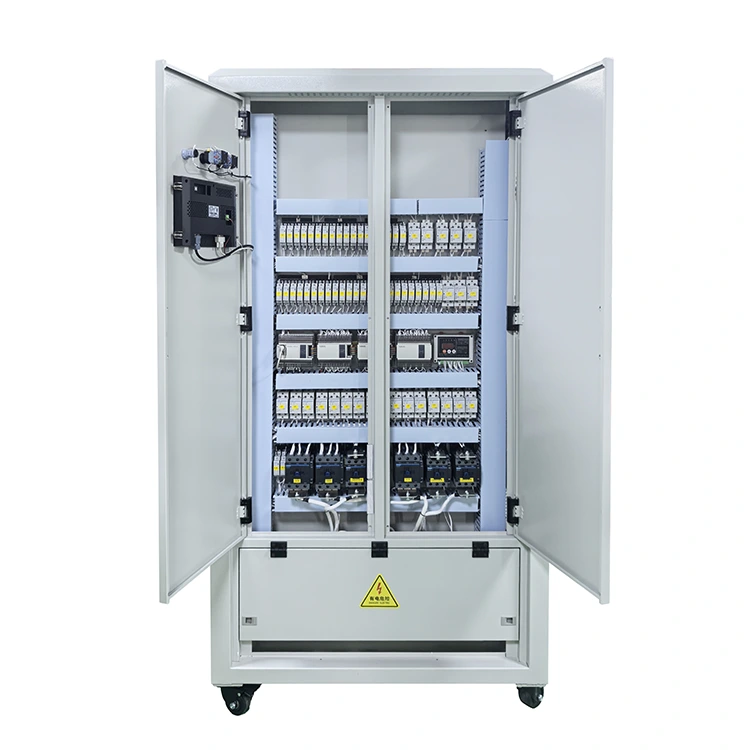
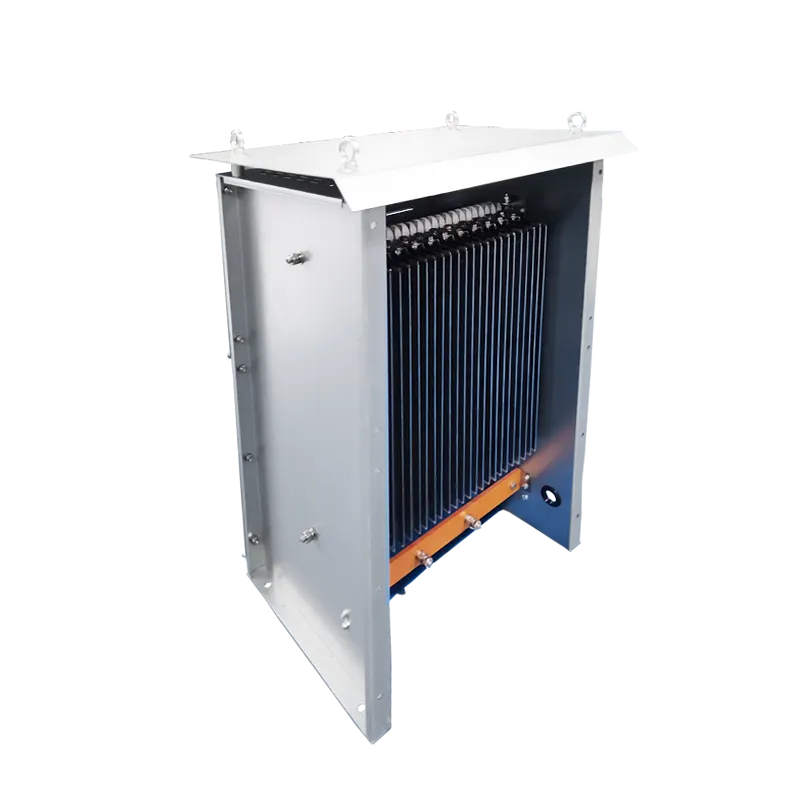
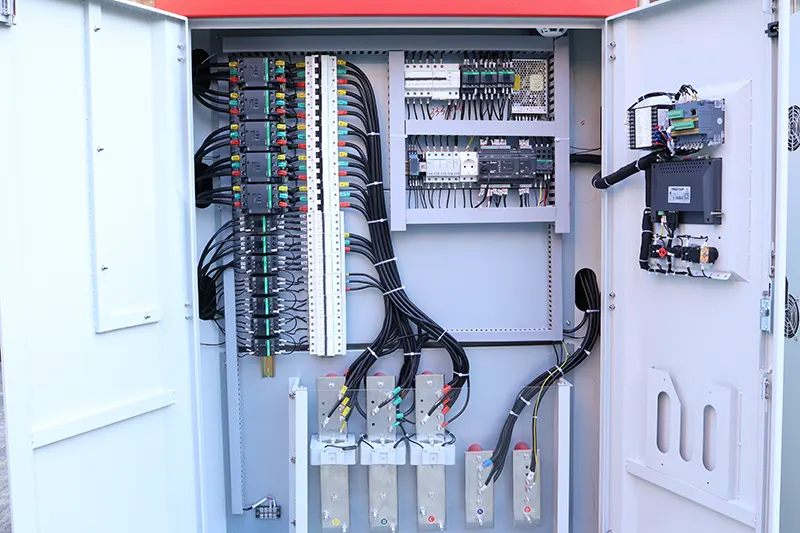
The RCD Load Bank is composed of multiple power resistors, AC or DC capacitors, and power diodes (typically large current fast recovery diodes) in a programmable array. The common topology is a three-phase rectifier bridge (each phase has resistors and capacitors connected in series, and diodes form a bridge rectifier), with resistors or capacitors connected in parallel at the output end. By controlling the activation and deactivation of different resistor, capacitor, and diode circuits, different levels of DC-side load power, different sizes of filter capacitors, and different conduction angles of current waveforms can be simulated.
Specifically, the resistors determine the active power of the load, the capacitors affect the smoothness of the rectified output and the conduction angle of the input current (the larger the capacitor, the higher the peak current and the more severe the harmonics), and the diodes achieve the conversion from AC to DC. The device is also equipped with a cooling system, overcurrent protection, and a data acquisition unit, which can display real-time key parameters such as input voltage, current, active power, harmonic distortion rate (THD), and peak coefficient.
1) Generator with rectifier load testing: For example, backup power supply for communication base stations, high-voltage DC power supply system for data centers. This tests the voltage waveform distortion, frequency fluctuation and overheating conditions of the generator when it is carrying switch power supply type loads.
2) UPS non-linear load capability verification: According to IEC 62040-3 standard, UPS must be able to drive a rectifier load with a peak coefficient of 3:1 without being damaged. The RCD Load Bank is the recommended testing equipment in the standard.
3) Inverter and frequency converter input performance testing: Simulate the harmonic injection from the front-stage rectifier bridge of the motor driver to the power grid, to test the effectiveness of the power quality compensation device.
4) Aviation power supply and ship power system testing: A large number of electronic devices on aircraft and ships use DC power supply. The RCD load cabinet can be used for ground joint testing.
5) Harmonic filter performance evaluation: Verify the suppression effect of passive or active filters on the harmonics generated by rectifier loads.
- Power Rating: Choose based on the rated capacity of the tested equipment. It is typically between 1kW and 500kW, and multiple units can be connected in parallel.
- Peak Factor: The typical peak factor (CF, peak/average value) of a typical rectifier load can reach 2.5 to 3.5. The RCD Load Bank should be able to withstand transient peak currents without triggering overcurrent protection.
- Harmonic Spectrum: Ideally, the 5th, 7th, and 11th harmonics generated by the three-phase rectifier load should comply with standards. Advanced models can adjust the capacitance value to change the harmonic distribution.
- Control Mode: Supports manual switching or touchscreen programming. Preset different load curves (such as gradually increasing the DC side resistance).
- Safety Protection: Must have over-temperature, overcurrent, and short-circuit protection, as well as a reverse voltage absorption circuit for the diode module to prevent voltage spikes from damaging components. Additionally, due to the presence of diodes and capacitors, there may be residual DC voltage inside the equipment. Therefore, an automatic discharge circuit must be designed and a clear warning must be provided on the operation panel.
Resistive loads simulate incandescent lamps and electric heating wires, with current being sinusoidal and power factor approximately equal to 1; resistive-inductive loads simulate motors and transformers, with current lagging but the waveform still being sinusoidal; while RCD loads simulate rectifying non-linear loads, with current waveforms being sharp pulses containing a large amount of harmonics. Therefore, power supplies that pass the tests only with resistive or resistive-inductive loads may still encounter problems such as unstable output voltage, overheating, and false alarms when actually carrying rectifying loads. RCD Load Bank fills this testing gap and is a necessary equipment for high-end power supply research and development and certification laboratories.