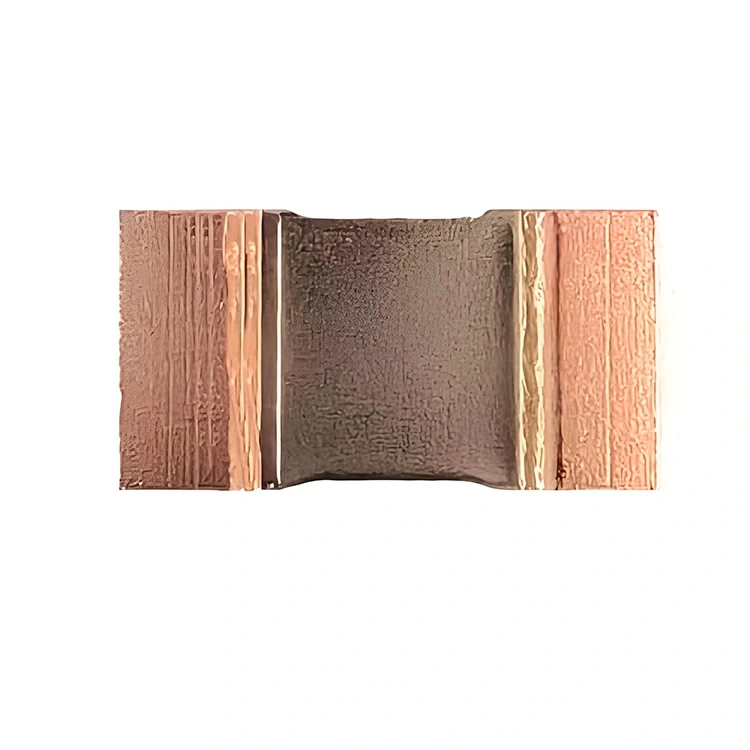
A current sense resistor (also known as a shunt resistor) is a precision component used to measure electric current by converting it into a proportional voltage drop. Typically placed in series with a load, these low-ohm resistors allow monitoring circuits—such as operational amplifiers or analog-to-digital converters—to accurately determine current flow. From battery management systems (BMS) in electric vehicles to power supplies, motor drives, and renewable energy inverters, shunt resistors are the foundation of efficient power monitoring, overcurrent protection, and closed-loop control.
At RST Electric, we manufacture a comprehensive range of current sensing solutions, including open-air metal element resistors (OAR), vertical alloy shunts (FLQ53/FLQ50), surface-mount alloy shunts (WSN), and high-current busbar shunts (FLU). With over 10 years of precision resistor engineering and ISO 9001 certified facilities, we deliver components that combine ultra-low resistance, low temperature coefficient (TCR), and high stability for the most demanding applications.
·Resistance Value: Choose a value that produces a measurable voltage drop (typically 10mV to 100mV) at maximum current while minimizing power loss (P = I²R). Our resistors span from 0.1mΩ to 100mΩ.
·Power Rating & Thermal Management: Ensure the resistor can dissipate the heat generated at full current. Options range from 1W surface-mount devices to 15W high-current shunts with direct busbar mounting.
·Tolerance & Accuracy: For precision applications (e.g., battery state-of-charge monitoring), select tight tolerances (±0.5%,±1% and ±2%). Our FLQ and FLU series offer ±1% as standard.
·Temperature Coefficient (TCR): Low TCR (20-100 ppm/°C) ensures stable readings across temperature variations. This is critical for automotive and industrial environments.
·Inductance: For high-frequency switching circuits (e.g., DC-DC converters), choose ultra-low inductance designs (<10nH) to preserve signal integrity. Our WSN and OAR series excel in this area.
·Mounting Style:
oThrough-hole radial (OAR, FLQ) – for vertical PCB mounting with excellent cooling.
oSurface-mount (WSN) – for automated assembly in compact designs.
oBusbar shunt (FLU) – for high-current connections with Kelvin sense terminals.
·Environmental Protection: Consider corrosion resistance (stainless steel or passivated alloy) and operating temperature range (-55°C to +170°C) for harsh environments.
By evaluating these parameters, you can ensure that your current sense resistor delivers accurate, drift-free measurements over its entire service life.
OAR Series – Open Air Metal Element Resistor
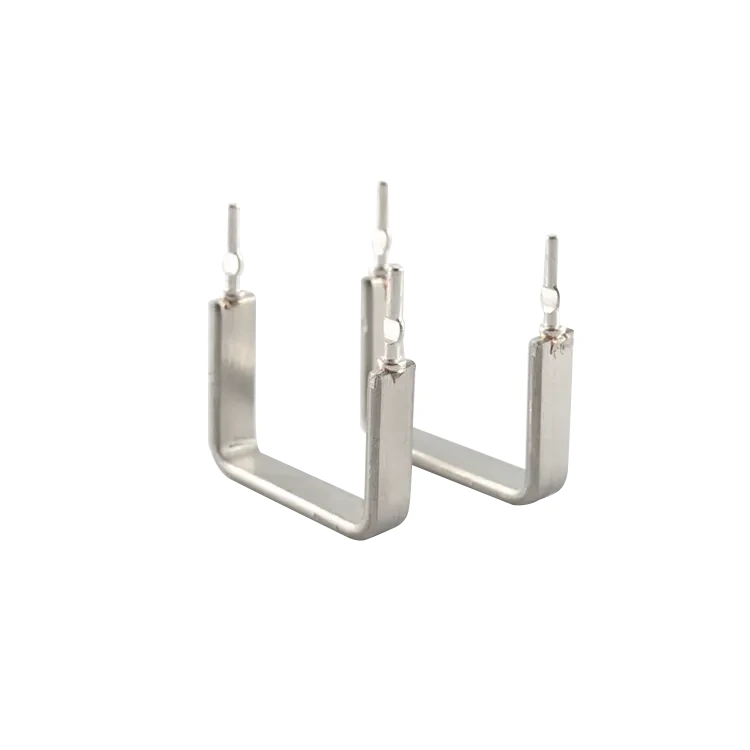
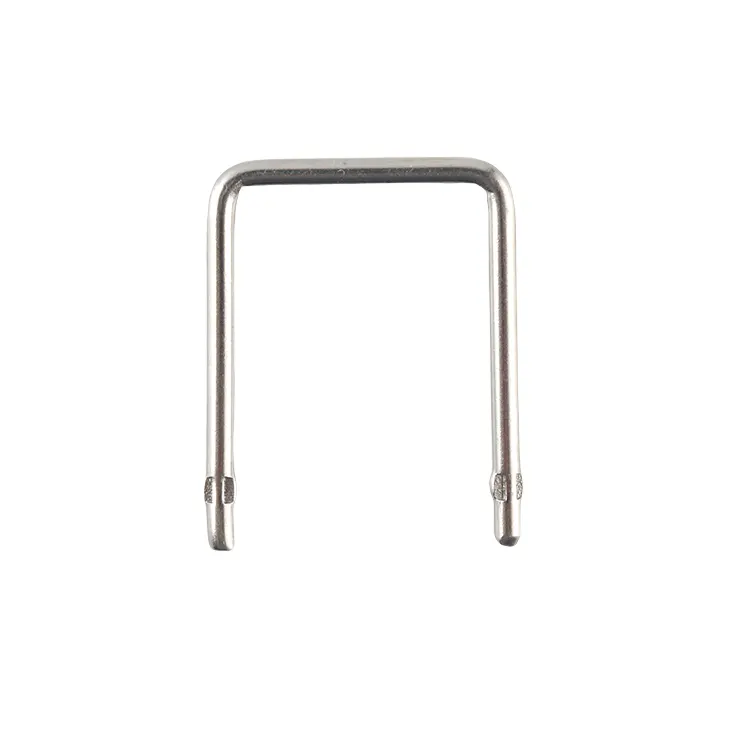
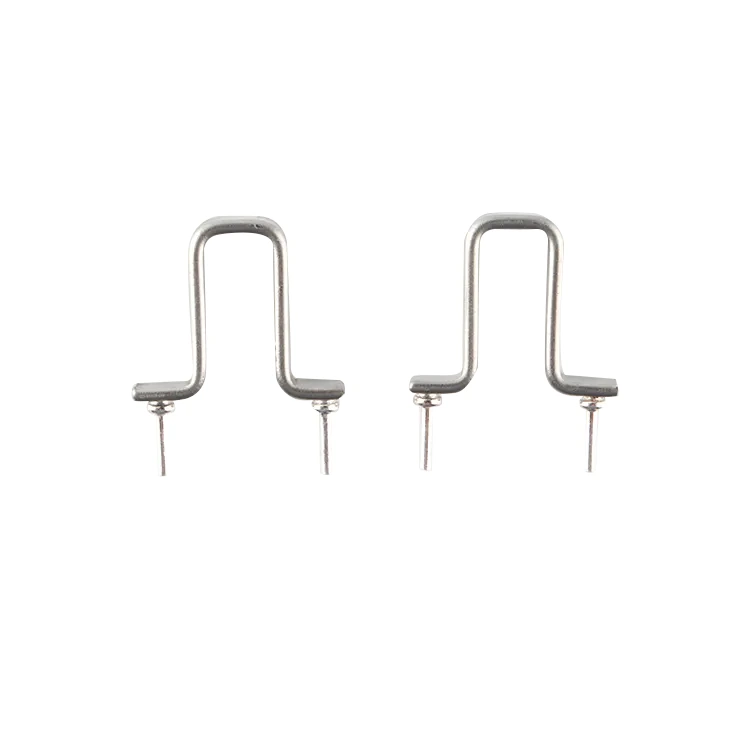
The OAR series features a vertical, open-air design with radial leads, offering ultra-low inductance and excellent thermal dissipation. Resistance values range from 5mΩ to 100mΩ with power ratings of 1W, 3W, and 5W. The open construction elevates the element above the PCB, allowing airflow underneath and keeping heat away from sensitive components. Ideal for inverter circuits, power supplies, and CPU power management.
FLQ53/FLQ50 Series – Vertical Alloy Current Sense Resistor
These vertical alloy resistors provide a compact, radial-lead solution with exceptional stability. The FLQ53 series covers higher current ratings (2.5A to 21A) with resistance from 2mΩ to 50mΩ, while the FLQ50 series is optimized for lower currents (1A to 3A) with resistance from 3mΩ to 100mΩ. Both feature ultra-low TCR (±50 ppm/°C) and tight tolerances down to ±1%, making them ideal for battery management, motor controls, and portable electronics.
WSN Series – Bare Alloy SMD Current Sense Resistor
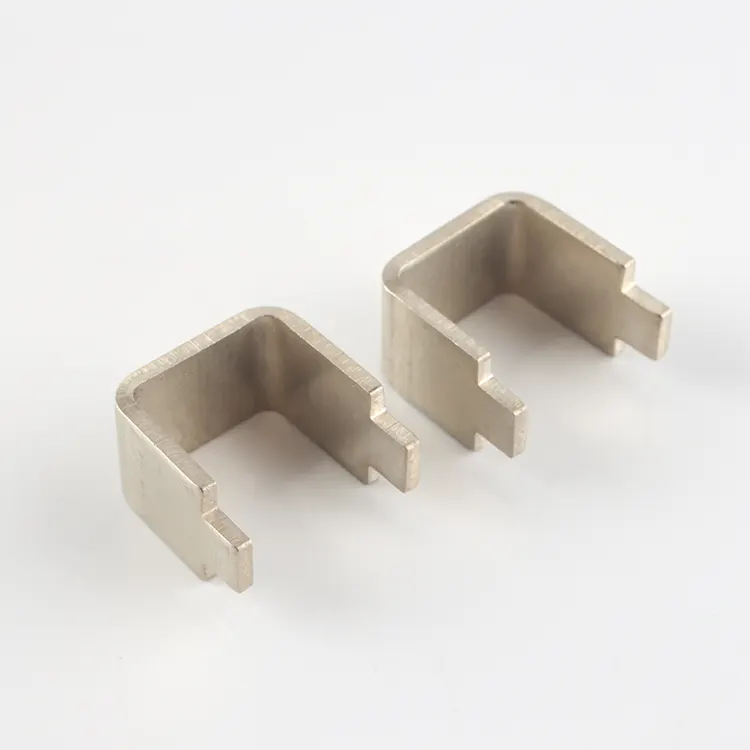
The WSN series brings the performance of electron-beam-welded alloy elements to surface-mount packaging. With resistance values from 0.1mΩ to 5mΩ and power ratings of 3W, 5W, and 7W, these SMD shunts are designed for high-volume automated assembly. Available in industry-standard footprints (2512, 3920, 5930, 2726), they feature ultra-low inductance (<5nH) and AEC-Q200 reliability, making them perfect for automotive BMS, high-frequency converters, and power modules.
FLU Series – High-Current Busbar Shunt
For applications requiring current measurement in the hundreds of amperes, the FLU series provides a robust busbar shunt solution. Constructed with vacuum electron beam welding and pure copper terminals, these shunts offer resistance from 0.1mΩ to 0.667mΩ with power ratings up to 15W. The Kelvin (4-wire) connection ensures accurate measurement by eliminating lead resistance errors. Ideal for battery racks, electric vehicle charging, and industrial power distribution.
| Industry | Specific Application | Recommended Series |
| Automotive | Battery Management Systems (BMS) | FLU, WSN, FLQ53 |
| DC-DC Converters (12V/48V) | WSN, OAR | |
| Electric Vehicle Chargers | FLU, WSN | |
| Industrial | Motor Drives & Servo Controls | FLQ53, OAR |
| Inverters & VFDs | WSN, FLU | |
| Power Supplies | OAR, FLQ50 | |
| Consumer Electronics | Fast Chargers (USB PD) | FLQ50, WSN |
| Power Banks | FLQ50 | |
| Renewable Energy | Solar Inverters | WSN, FLU |
| Energy Storage Systems (ESS) | FLU, WSN | |
| Telecom & Server | Power Distribution Units | WSN, FLU |
| Test & Measurement | Electronic Loads | OAR, FLQ53 |
Q: What is the difference between a current sense resistor and a standard resistor?
A: Current sense resistors are optimized for ultra-low resistance (typically <0.1Ω), low TCR, and high stability. Standard resistors are designed for general-purpose applications and may introduce unacceptable voltage drop or temperature drift in sensing circuits.
Q: Why is Kelvin (4-wire) connection important?
A: In high-current shunts (FLU series), lead resistance can introduce significant errors. A Kelvin connection separates the current-carrying terminals from the voltage-sensing terminals, eliminating lead resistance from the measurement.
Q: What TCR is considered “low” for current sensing?
A: For precision applications, TCR below ±100 ppm/°C is desirable. Our FLQ and WSN series offer TCR as low as ±25 ppm/°C, ensuring stable readings across temperature variations.
Q: Can I use a surface-mount current sense resistor for high-current applications?
A: Yes. Our WSN series offers power ratings up to 7W in SMD packages, suitable for currents up to 100A with proper PCB layout and thermal management. For higher currents (>200A), our FLU busbar shunts are recommended.
Q: How do I calculate the optimal resistance value?
A: Choose a resistance that produces a voltage drop of 50mV to 100mV at maximum current. For example, for a 50A maximum current, a 1mΩ resistor yields 50mV drop. Always verify power dissipation (P = I²R) stays within the resistor’s rating.
To learn more about our specific current sense resistor offerings, please explore the following product categories:
·OAR Series (Open Air Metal Element) – Vertical through-hole resistors for inverter and power supply current sensing.
·FLQ53/FLQ50 Series (Vertical Alloy) – Compact radial-lead shunts for battery management and motor controls.
·WSN Series (Bare Alloy SMD) – Surface-mount, for automotive and high-frequency applications.
·FLU Series (Busbar Shunt) – High-current busbar shunts with Kelvin connection for battery racks and EV charging.
Whether you need a precision current sense resistor for a new BMS design, a high-reliability SMD shunt for automotive electronics, or a custom busbar solution for a power distribution system, our team is ready to assist. Contact us today for a detailed proposal, technical consultation, or factory tour.