
Abstract · This article provides a detailed technical examination of the Aluminum Housed Braking Resistor, exploring its construction, thermal management, and critical role in motor control and drive systems. The discussion covers resistive element technology, power ratings, heat dissipation mechanisms, and the engineering considerations that ensure safe energy dissipation during regenerative braking.
01. Function and Role in Regenerative Braking
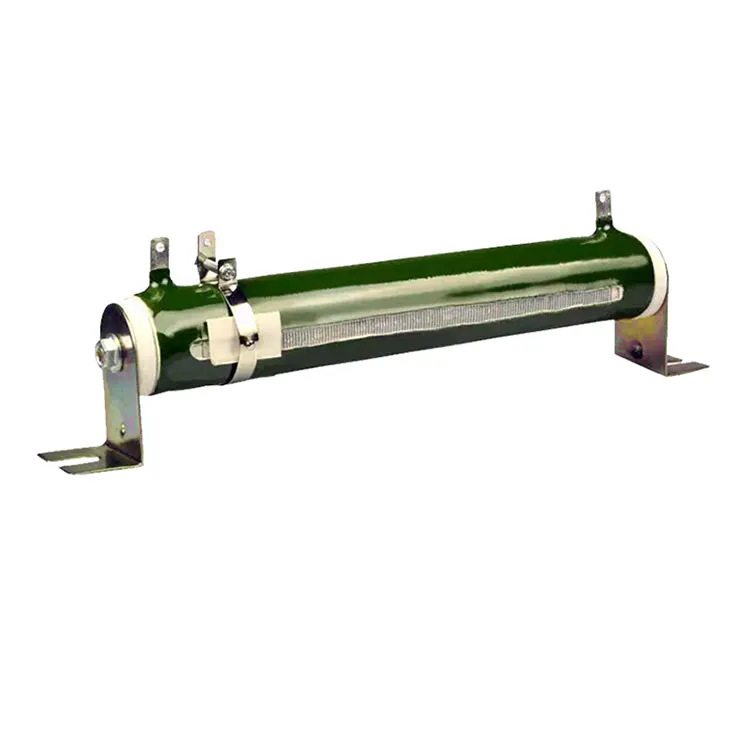
An Aluminum Housed Braking Resistor is a power resistor designed to dissipate the electrical energy generated during regenerative braking in motor drive systems. When a motor decelerates, it acts as a generator, converting kinetic energy into electrical energy that must be absorbed to prevent overvoltage in the drive's DC bus.
The braking resistor provides a controlled path for this excess energy, converting it into heat that is safely dissipated into the surrounding environment. Without a braking resistor, the DC bus voltage would rise to dangerous levels, potentially damaging the drive's capacitors and power electronics. The aluminum housing serves as both a protective enclosure and an integrated heat sink, enabling efficient thermal management in demanding industrial applications.
Dissipate regenerative braking energy
Extruded aluminum with integrated heat sink
High power dissipation and thermal stability
02. Construction and Resistive Element Technology
Resistance wire wound on a ceramic core for high power handling
Resistive paste screen-printed on ceramic substrate for lower inductance
Extruded profile with cooling fins for efficient heat transfer
Thermally conductive, electrically insulating material fills the housing
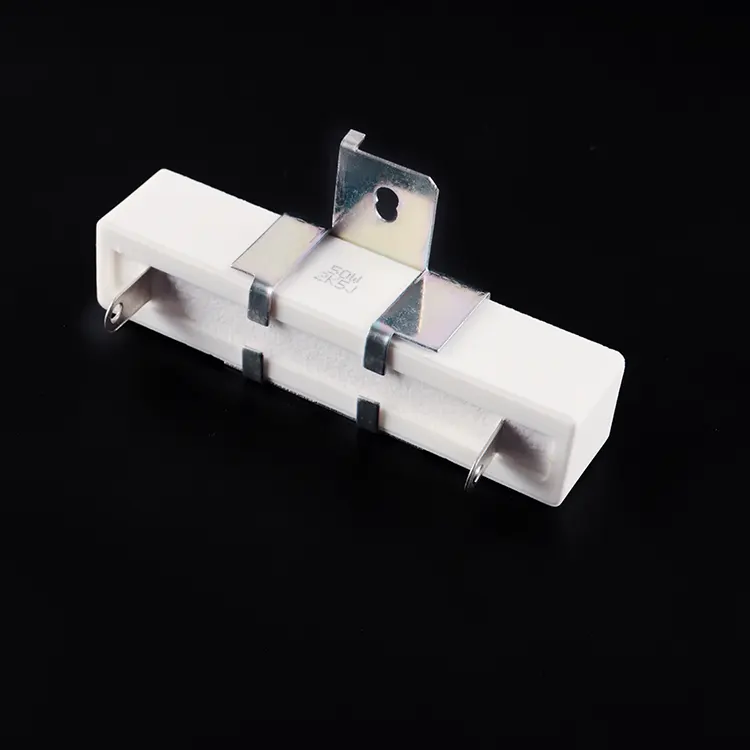
The construction of the Aluminum Housed Braking Resistor is optimized for high power dissipation and long-term reliability. The resistive element is either a wirewound coil or a thick-film track, both selected for their ability to handle high currents and thermal cycling. The element is encapsulated within a ceramic core and housed in an extruded aluminum profile, which provides mechanical protection and acts as an integrated heat sink. The potting compound ensures electrical insulation and efficient thermal transfer from the element to the housing.
Construction Note: For high-frequency drive applications, thick-film resistors are often preferred due to their lower inductance. Wirewound resistors are more suitable for general-purpose braking applications where inductance is not a critical concern.
03. Thermal Management and Heat Dissipation
Effective thermal management is the defining characteristic of the Aluminum Housed Braking Resistor. The aluminum housing provides a low-resistance thermal path from the resistive element to the exterior surface, where heat is transferred to the air by convection.
- Integrated Heat Sink: The extruded aluminum profile features cooling fins that increase surface area for improved convection.
- Thermal Conductivity: Aluminum's high thermal conductivity (205 W/m·K) ensures efficient heat transfer from the element to the housing.
- Mounting Surface: The flat base of the housing can be mounted to a chassis or additional heat sink for enhanced cooling.
- Forced Air Cooling: In high-power applications, fans may be used to increase airflow across the housing.
- Temperature Derating: Power ratings are specified for a defined ambient temperature and must be derated for higher temperatures.
04. Power Ratings and Performance Specifications
The Aluminum Housed Braking Resistor is available in a wide range of power ratings to suit different drive sizes and braking requirements.
| Parameter | Typical Range | Consideration |
|---|---|---|
| Power Rating | 50 W to 2000 W | Selected based on braking duty cycle |
| Resistance Range | 1 Ω to 1 kΩ | Determined by drive DC bus voltage and braking current |
| Resistance Tolerance | ±5% to ±10% | Standard tolerance for power resistors |
| Maximum Element Temperature | 200°C to 375°C | Limits the allowable power dissipation |
| Dielectric Withstanding Voltage | 1000 V to 2500 V AC | Ensures isolation from the housing |
| Operating Temperature | -40°C to +200°C | Depends on mounting and cooling conditions |
Based on typical specifications for aluminum housed braking resistors.
The power rating determines the maximum continuous power the resistor can dissipate without exceeding its temperature limits. For braking applications, the duty cycle—the proportion of time the resistor is active—is a critical factor in selecting the appropriate power rating.
05. Protection Systems and Safety Features
The Aluminum Housed Braking Resistor is designed with several safety features to ensure reliable operation and protect personnel and equipment.
- Thermal Protection: Thermostats or thermal switches can be integrated to disconnect the resistor if it overheats.
- Electrical Isolation: The potting compound and ceramic core provide insulation between the resistive element and the aluminum housing.
- IP Rating: The housing can be sealed to IP54 or higher for protection against dust and water.
- Overload Capability: Resistors are designed to handle short-term overloads without failure.
- Mounting Security: The housing is designed for secure mounting to prevent movement and ensure proper heat transfer.
06. Application Domains and Industrial Use Cases
The aluminum housed braking resistor is used in a wide range of motor control applications where regenerative energy must be safely dissipated.
- Variable Frequency Drives (VFDs): Used in industrial drives for pumps, fans, and conveyors to dissipate braking energy.
- Elevators and Hoists: Absorb energy during descent or rapid stopping.
- Cranes and Winches: Dissipate energy during lowering and braking operations.
- Wind Turbines: Used for dynamic braking and safety stops.
- Electric Vehicles: Used in regenerative braking systems and battery testing.
- Test Benches and Load Banks: Simulate electrical loads for generator and UPS testing.
The combination of high power handling, efficient thermal management, and robust construction makes the aluminum housed braking resistor a reliable choice for these demanding applications.
Frequently Asked Questions
Product specifications and availability may vary. Always consult the manufacturer's documentation for your specific application requirements.